


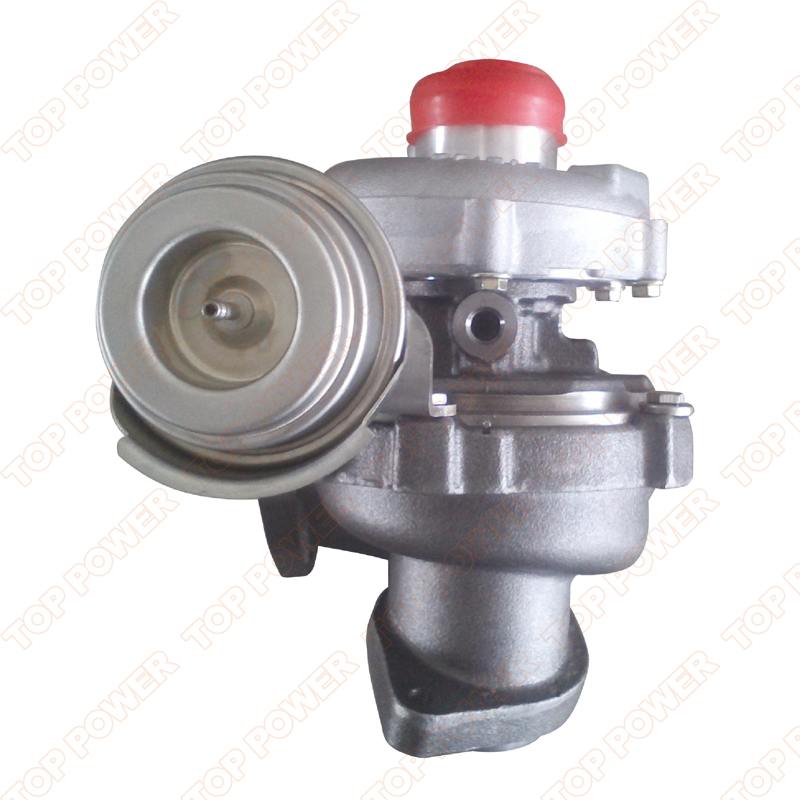

The Role of Turbocharger Balancing in High-Speed Performance
When people talk about turbocharger performance, they usually focus on boost pressure, compressor design, or materials. But in real-world applications, one factor quietly determines whether a turbo runs smoothly or fails early: balancing.
At extremely high rotational speeds — often over 100,000 RPM — even a tiny imbalance inside the turbocharger can create serious vibration. Over time, this affects not only performance but also the lifespan of the entire unit.
Why balancing matters more than people think
A turbocharger is a high-speed rotating assembly. The shaft, turbine wheel, and compressor wheel must spin as a perfectly balanced unit. If the weight distribution is uneven, centrifugal force will amplify the imbalance as speed increases.
In practical terms, poor balancing can lead to:
vibration and noise
premature bearing wear
oil seal leakage
reduced efficiency
in severe cases, shaft breakage
These issues don’t always appear immediately. A turbo may seem fine at first but fail after a short period due to continuous internal stress.
Two levels of balancing
In manufacturing and rebuilding, turbochargers are typically balanced in two stages:
Component balancing
Each individual part — such as the turbine wheel or compressor wheel — is balanced separately before assembly. This ensures that every component meets basic tolerance requirements.
Core assembly (CHRA) balancing
After assembly, the complete rotating group (CHRA) is balanced again at high speed. This step is more important because it reflects real operating conditions. Even if each part is balanced individually, small differences during assembly can still create imbalance.
High-speed balancing machines simulate actual working speeds and adjust the assembly to minimize vibration.
The impact on performance
A well-balanced turbocharger delivers smoother and more stable performance. It allows the shaft to rotate with less resistance, which improves response and reduces mechanical stress.
In contrast, an unbalanced turbo may:
take longer to build boost
produce inconsistent pressure
generate abnormal noise
lose efficiency over time
For performance applications, balancing becomes even more critical. At higher boost levels and higher speeds, small imperfections become much more noticeable.
Balancing in repair and aftermarket products
Balancing is not only important in new production but also in turbo repair. When a turbo is rebuilt, replacing parts like bearings or the shaft can change the balance of the rotating assembly.
This is why professional rebuilding always includes high-speed balancing after assembly. Simply replacing parts without proper balancing can lead to early failure, even if all components are new.
For buyers, this is also a key point when choosing aftermarket turbochargers. A properly balanced unit will typically offer better durability and more consistent performance.
The practical takeaway
Balancing may not be visible from the outside, but it plays a major role in how a turbocharger performs and how long it lasts. For manufacturers, it is a critical quality step. For repair shops, it is a must-do process. And for buyers, it is one of the factors that separates a reliable turbo from a problematic one.
At high speed, precision is everything — and balancing is what keeps that precision under control.